September is here, the first frost is on the horizon, and the growing season will be winding down in the coming months across Kansas. With the transition to the dormant season comes a key time for grazing planning, whether you are ending your grazing season in the coming months, grazing stockpiled grass during the dormant season, or using a combination of strategies to support your herd throughout the year. Keeping a few considerations in mind can support the productivity of your grass resources into the winter and the following years.
Watch grazing height:
Knowing the beginning and ending grazing heights for your grass pastures is key to understanding your available forage and setting up your pastures to be productive in the following year. Leaving adequate residual height protects the soil surface from erosion, preserves capacity to capture and retain soil moisture, and avoids stressing plants to the point of depleting root reserves, which will reduce future stand productivity.
If your grazing season is ending at or near the end of the growing season, your ending grazing height should ideally be determined at the beginning of the growing season. Stocking rate can then be managed throughout the season with this target in mind to avoid over- or under grazing. The second best time is now to take a look at the height of your grass stand on your pastures and adjust your end of season grazing accordingly. Leaving approximately 50% of the total season production as standing forage at the end of the grazing season is the rule of thumb for grass stands.
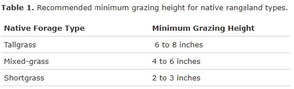
For native grass stands, this roughly translates to different minimum ending grazing heights depending on your dominant grasses (Table 1). If you’re already below the target grazing height or expect you’ll graze below this target by your planned shipping date, consider moving up plans to destock to preserve remaining cover and avoid reducing stand productivity for the next growing
season.