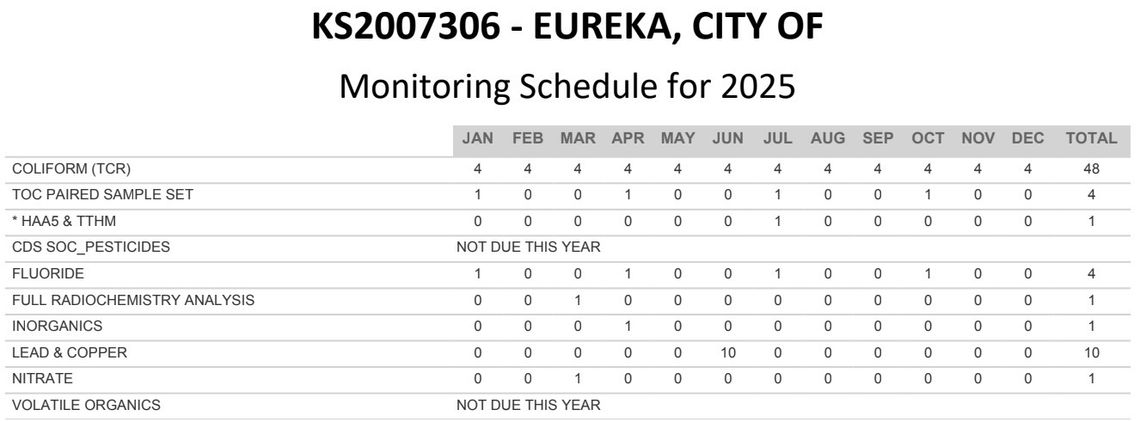
After concerns were shared with the Eureka City Council regarding lead being in the city’s water, The Eureka Herald filed Kansas Open Record requests to verify the city was within specified requirements from the Kansas Department of Health and Environment (KDHE).
Approximately two years ago, the KDHE had all public water providers send surveys to their users asking them to share what pipe material was utilized to connect their home/ building or other structures to the water main. Earlier this year, the City of Eureka, along with other water source providers, sent out a “Notification of Known Potential Service Line Containing Lead” brochure created by the KDHE. The brochure stated, “You’re being notified because your water system has determined that a portion of or the entire water pipe that connects your home, building or other structure to the water main is made from one of the following: Lead, Galvanized Material, or Unknown Material.” The brochure provided additional details, noting health effects, steps to reduce exposure to lead and testing recommendations.
Per the 2024 Consumer Confidence Report (CCP) covering the calendar year of 2023, the City of Eureka was monitored for lead between 2020-22 and was below the action level of 15 parts per billion (ppb). According to the report, the City of Eureka had a range of 0-14 ppb during that collection period.
City Of Eureka In Compliance With Water Testing -- TITLE . . . . . . . . . . . . . . . . . . . . . .
If a public water source is below the action level, they must test for lead every three years. The City of Eureka will collect 10 samples this year to report on lead and copper in July. CCPs for the last three years, along with other reports, can be viewed at https://www. eurekaks.org.
The city will conduct a total of 60 tests during 2025.
also reached out to the Greenwood County Health Department, which noted they had not been informed of increased lead levels in Greenwood County. Although lead pipes could cause lead hazards in the water, they also noted that individuals could see an increase in lead from lead-based paint; some imported, non-glossy, vinyl miniblinds; painted toys and household furniture made before 1978; lead-glazed ceramic ware/ pottery; exposed to lead at jobsite that could result in bringing lead dust home on clothes/shoes/ hair/skin; lead smelters or other industries; hobbies including making pottery, stained glass or refinishing furniture that is exposed to lead hazards; and folk remedies that contain lead.
Those who believed they have been exposed to lead should reach out to their primary care provider of their county health department for testing.